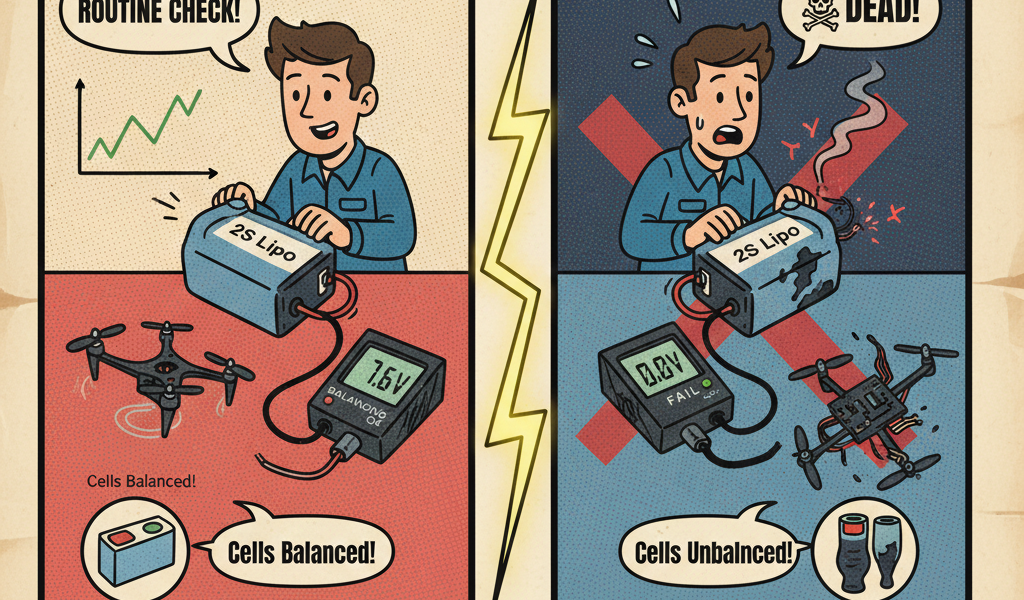
Most battery failures are not dramatic. No sparks. No smoke. Things just stop working the way they used to.
A device that once ran all afternoon now taps out early. Voltage drops faster than expected. Heat shows up where it never did before. These are the moments when people finally start paying attention to the 2S Lipo battery inside the system.
And usually, the problem did not start yesterday.
The Mistake of Treating Small Batteries Casually
There is a strange assumption that smaller battery setups are forgiving. That you can push them a bit. Ignore them a bit. They will cope.
A 2S Lipo battery does not work that way. It is compact, yes, but it still relies on balance, temperature control, and correct charging. When those slip, performance slips quietly with it.
Because nothing fails instantly, people keep using the system. Until one day it simply stops delivering.
Two Cells, One Relationship That Needs Managing
At a basic level, a 2S Lipo battery consists of two lithium-polymer cells connected in series. That partnership is the whole story.
When both cells age evenly, the battery behaves well. Voltage stays stable. Heat remains predictable. Runtime feels consistent. When one cell starts lagging, the entire pack follows.
This is where servicing becomes essential. Not dramatic servicing. Simple checks. Balance readings. Charge behaviour over time. These small observations tell you a lot about the health of a 2S Lipo battery.
Why Voltage Imbalance Creeps In
Imbalance does not appear out of nowhere. It builds slowly.
Fast charging without balance mode. Storing a 2S Lipo battery fully charged for weeks and running it too low repeatedly. Each habit nudges the cells out of sync. A little at first. Then more.
People often blame the battery brand. In reality, it is the usage pattern. Two cells rarely drift equally when subjected to rough treatment.
The Role of Proper Charging, Which Is Less Exciting Than It Sounds
Charging is not glamorous. It is also where most long-term damage happens.
A 2S Lipo battery needs balanced charging. Every time. Not occasionally. Not when convenient. Every time. This ensures that both cells reach full voltage simultaneously and stop simultaneously.
Skipping this step saves minutes. It costs months of a lifespan.
Over time, properly charged batteries hold voltage better under load. They heat less. They recover faster. The difference is noticeable if you are paying attention.
Storage Is Where Good Batteries Go Bad
Most batteries spend more time stored than used. This is rarely factored into planning.
A 2S Lipo battery stored at full charge ages faster. One stored empty degrades quietly. Storage voltage exists for a reason. It keeps internal chemistry calm.
People who rotate batteries regularly understand this—those who do not often discover swollen packs months later and wonder what happened.
Nothing happened. Time did.
Early Warning Signs People Ignore
Batteries communicate, just not loudly.
A 2S Lipo battery that feels warmer than usual under normal load is telling you something. One that finishes charging unevenly is saying something else. Reduced runtime. Voltage sag. Slight swelling that is easy to dismiss.
These signs appear long before failure. Servicing catches them early. Replacement becomes a last resort instead of the default response.
Why Servicing Is Not Just for Large Systems
There is a belief that battery servicing is only worth it for expensive setups. Everything else gets replaced.
That thinking adds cost over time. It also adds waste.
Simple servicing routines can significantly extend the usable life of a 2S Lipo battery. Balance checks. Visual inspections. Controlled discharge testing. None of this is complex. It just requires consistency.
For organisations running multiple devices, this approach quickly pays for itself.
Safety Is Mostly About Habits
Lithium-polymer batteries are stable when properly managed. Most incidents trace back to shortcuts.
Damaged leads left in use. Improvised chargers. Ignored swelling. A 2S Lipo battery does not forgive these habits. It tolerates them for a while. Then it does not.
Safe handling is boring—use the correct connectors. Clean terminals. Appropriate enclosures. None of this feels urgent until something goes wrong.
Why the 2S Lipo Battery Keeps Showing Up in Reliable Systems
Despite newer configurations and higher-voltage packs, the 2S LiPo battery remains common. There is a reason.
It offers enough voltage for many applications without introducing excessive thermal risk. It is easy to monitor. Easy to balance. Easy to integrate into existing systems.
Engineers choose what behaves predictably. Technicians choose what fails logically. The 2S Lipo battery does both.
When Replacement Actually Makes Sense
Not every battery can or should be saved—cells age. Chemistry breaks down. At some point, replacement is the responsible choice.
The difference is knowing when that point arrives. Servicing provides clarity. Instead of guessing, decisions are based on data. Voltage spread. Capacity loss. Thermal behaviour.
A 2S Lipo battery that has reached the end of its cycle life shows it clearly when appropriately monitored.
A Quieter Way to Think About Power
Battery conversations often focus on output and performance. Less attention goes to care, balance, and routine handling.
The 2S Lipo battery from RC Battery rewards the second approach. It does not demand perfection. It demands consistency.
Used thoughtfully, it delivers steady power without drama. Neglected, it fades quietly until it becomes a problem.
In most systems, avoiding problems is the primary goal.
You may also like



Leave a Reply